Professional dishwashing detergent is much more than just a consumable for a restaurant, catering establishment, or food processing company. Indeed, high-temperature wash cycles, reaching up to 85°C , combined with the use of specific products , guarantee the complete elimination of bacteria and disinfection in accordance with HACCP standards . Beyond hygiene, the choice and proper use of these products directly influence the lifespan of the dishwasher , which can reach up to 15 years for a well-maintained professional dishwasher. In this guide, we explain how to choose the right dishwashing detergents for your restaurant dishwasher, optimize their use, and preserve your professional dishwasher with appropriate maintenance.
Clean dishes in a professional kitchen
The cleanliness of dishes is of paramount importance in a professional kitchen. Clean dishes not only guarantee a pleasant experience for customers, but they also help maintain the high hygiene standards required in the food service industry. Indeed, since the implementation of HACCP methodologies , hygiene in the catering sector has evolved considerably. The introduction of disinfectant products , food-grade brushes , color-coded cloths , and touchless kitchen waste bins, for example, has contributed to improved hygiene.
In this context, clean and shiny plates and cutlery are a sign of professionalism and attention to detail, which can have a positive impact on the reputation of a restaurant.
Furthermore, clean dishes, combined with a choice of liquid or powder detergent and professional rinsing agents, contribute to the quality of the food served. Plates and glasses free of food residue or stains can enhance the presentation of dishes and drinks. This allows chefs to showcase their culinary creations and ensures an optimal tasting experience for customers.
Finally, clean dishes help prevent cross-contamination . Food residue and bacteria on dishes can spread to fresh food, potentially leading to food poisoning and other health problems.
Hygiene in the kitchen is now an imperative with the implementation of Haccp procedures and methods of cleaning and disinfecting surfaces and equipment which can be ensured with the use of a washing and disinfection station.
The tableware and your dining room
The cleanliness and hygiene of the dishes is a fundamental point, but so is the maintenance of the restaurant room as well as the general atmosphere linked to the choice of paper napkins and tablecloths.
The implementation of maintenance methods adapted to HACCP through a cleaning trolley and floor and surface washing systems guaranteeing perfect hygiene.
The perfect cleaning of the dishes helps to guarantee the limitation of cross-contamination and the clearing of plates, cutlery by removing bio-waste and various waste and by setting up professional HACCP kitchen bins to carry out selective sorting required under the Aged directives.
Washing dishes that haven't been properly cleaned of food scraps or pre-washed using a spray nozzle will result in grease and possibly food particles ending up in the wash tank. This will negatively impact washing efficiency , regardless of the quality and concentration of the detergent used.
The different types of washing products for professional dishwashers
Automatic dishwashing liquid
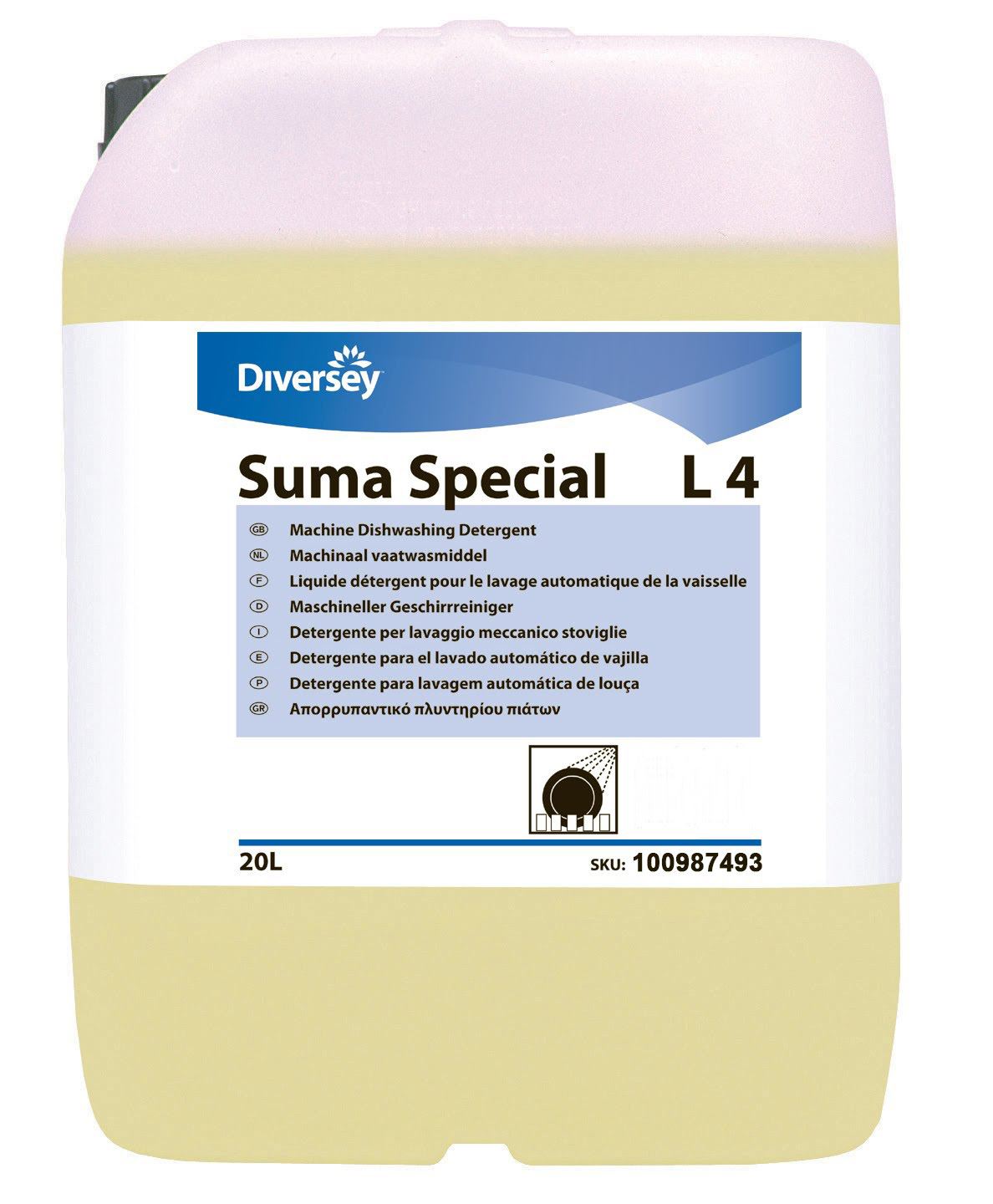
These are concentrated liquid detergents primarily used in professional dishwashers equipped with automatic dispensers . These liquid detergents dissolve quickly without leaving residue, making them particularly suitable for all wash cycles. Their highly alkaline formula effectively removes stubborn stains such as grease, starch, and protein. Dishwashing liquid adapts to different water hardness levels and ensures optimal cleaning of porcelain, glass, and stainless steel. Some products have a pH between 12.5 and 12.3 , guaranteeing powerful degreasing action while remaining food-safe. They are now available in eco-friendly formulations with Ecolabel or NordikSwan certifications . Manufacturers like EXEOL and Diversey now offer fully Ecolabeled product lines for an environmentally responsible solution.
The liquid rinse aid
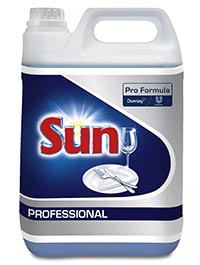
Rinse aid, often incorrectly called a rinse aid, facilitates the flow of water over dish surfaces instead of causing droplets. Its function is to dry the dishes. Combined with a high rinse temperature between 85° and 90°C, it accelerates drying through evaporation. This product prevents detergent and dirt residue from redepositing on the dishes, while also eliminating limescale during the drying process. Its neutral or sometimes slightly acidic formulation is suitable for a wide range of professional dishwashers and complies with HACCP standards. Specifically designed for all water hardness levels, it guarantees a perfect, streak-free shine . Unlike liquid detergent, a professional rinse aid can be used safely in a domestic dishwasher. In a professional dishwasher, the rinse aid is dispensed via a dosing system or simply with a rinse pump integrated into the machine.
Powdered dishwashing detergent
Professional dishwasher powder is distinguished by its high concentration and intensive cleaning power compared to consumer products, which cannot use the same active ingredients . It often contains a bleaching component that effectively removes discoloration and protein residue. The powder format simplifies dosing and handling while reducing physical risks. However, this powder remains much more active and concentrated than consumer versions, making it unsuitable for household dishwashers. Using a powder with excessive alkalinity can permanently damage your machine, as the stainless steel and pump are not designed to withstand this type of product. Its pH reaches approximately 12.2, ensuring optimal degreasing action for professional washing.
If you don't have an external water softener for your machine, you may have a dishwasher with a built-in softener. In this case, you'll need to use a specific dishwasher regenerating salt, which isn't formulated like standard plastilized water softener salt. This regenerating salt allows the integrated water softener to produce softened water by removing minerals . This limescale prevention action prevents the buildup of deposits and white marks on both your dishes and the heating element. The harder the water, the more frequently the softener needs to be regenerated. For professional dishwashers with short cycles, we generally install a dedicated water softener upstream of the water supply. This 99.7% refined salt protects the spray arms and extends the lifespan of the equipment. It also guarantees spotless, streak-free, and sparkling dishes.
Products suitable for glass washing machines
Glass cleaning liquids are specifically formulated to remove traces of coffee, tea, wine, and lipstick. Effective in all waters with a hardness (TH) of 30° or higher, they possess a powerful sequestering action that prevents limescale deposits, even in very hard water. Their high pH helps eliminate stubborn stains while protecting decorations and maintaining the stability of beer foam. Formulated without phosphates or EDTA, these products minimize the risks associated with their use.
How to choose the right dishwasher detergent for your restaurant
Choose products for your type of professional dishwasher
The choice of dishwasher detergent depends directly on the type of machine installed in your restaurant or kitchen. Hood-type and front-loading dishwashers require liquid detergents compatible with their integrated automatic dispensers. These machines operate in short cycles of 2 to 3 minutes, which necessitates ultra-concentrated formulations. Therefore, we must absolutely avoid consumer-grade products that lack the required effectiveness for these short contact times. Conveyor and tunnel dishwashers, more commonly found in central kitchens, require specific dosing systems adapted to their continuous flow. Since the baskets pass continuously, a dispenser with a probe to measure the alkalinity of the wash water is essential.
Take into account the water hardness
Water hardness determines the choice of professional dishwasher detergent. Use a product for soft water when the TH (total hardness) is between 5 and 10, a product for medium-hard water between 10 and 15, and a product for hard water above 16. For very hard water exceeding 30-35 TH, specialized formulations are necessary. Ideally, you should have a water softener that transforms hard water into soft water with an ideal TH between 6 and 8. Therefore, if your restaurant dishwasher has a functioning water softener, you can opt for products formulated for soft water. This will save on descaling of dishes or the machine itself and will preserve your dishwasher.
Evaluate the volume of dishes to be processed
Daily usage influences the optimal product format. Powders and liquids allow for flexible dosing depending on the load. Tablets are suitable for long cycles at full capacity. However, overdosing damages dishes and reduces the dishwasher's lifespan.
Check compatibility with your equipment
Some models require specific formats such as tablets, liquids, or powders. Automatic dispensers ensure correct dosing and simplify dishwasher maintenance. Their compatibility with the pH and viscosity of the products remains crucial.
Use of professional dishwashing products
Professional dishwashers: a better understanding
Washing dishes is a basic task in any professional kitchen. Clean plates, glasses, and cutlery are not only a hygiene requirement, but they also contribute to the overall experience for customers in a restaurant, children in a school, etc.
It is therefore important to consider the main components of a professional dishwasher, the correct maintenance and cleaning of your professional dishwasher, the role of rinsing to obtain spotless dishes, the use of a descaler to prevent build-up and maintain optimal performance, the optimization of the dishwasher arm for maximum cleaning power, the adjustment of the dishwasher pressure for different types of dishes, the importance of soft water and the use of a dishwasher water softener, the control of the dishwasher temperature for effective cleaning, and finally, common troubleshooting tips for professional dishwashers.
By listing all these parameters, you will realize that having "good" products is only the beginning of the result !
The correct dosage of the products
An average overdose of 20% is still observed in food service establishments, according to ADEME (the French Agency for Ecological Transition). Therefore, it is important to periodically check the detergent supply to achieve optimal results. The product is often drawn into a container via a "dip pump." Since the container is often located under worktops or behind the machine, the user may not notice the level. Often, problems are simply caused by an empty container! The same applies to the dispenser itself, where the "pumping" action occurs through wear parts that must be checked. Concentrations that are too low or too high cause undesirable results on the dishes. Automatic dispensers inject the precise quantity based on the water hardness, the level of soiling, and the volume being processed.
The order in which the different products should be used
The detergent works during the wash cycle to degrease and clean. The rinse aid then activates to facilitate drying and prevent streaks. When descaling, the dispenser should be deactivated for maximum effectiveness.
As explained above, never use household dishwashing liquid in place of specifically formulated professional detergents.
Foam present in the wash tub and on the dishes
The presence of foam in the dispenser indicates an excess of product or an unsuitable detergent. It can also be caused by a manual pre-wash with a detergent-based rinse aid that doesn't require rinsing with water, which would dilute the detergent in the tub. However, excessive foam is often due to the rinse aid, as the washing product itself never produces foam in the dispenser.
Overloading the baskets prevents water from reaching all surfaces evenly.
Adjusting the automatic dispensers
The suction hoses must be checked and cleaned weekly. The dosing pumps must be checked monthly. A semi-annual calibration ensures accurate dosing, including checking the pH of the washing solution in the tank. The setting is fine-tuned after a minimum of three cycles to stabilize the results. Naturally, the softer the water, the lower the dose will be, as the detergent will not have to sequester limescale and can focus on its degreasing and cleaning action.
Dishwasher maintenance and the impact of products on its lifespan
The importance of using suitable products for dishwasher maintenance
Detergents and rinse aids specifically designed for professional dishwashers guarantee their performance and durability. Using unsuitable products damages the appliance's components, reduces its efficiency, and causes premature breakdowns.
Prevent the accumulation of limescale and residue
Limescale builds up in pipes and machine components, reducing its efficiency and lifespan. In areas with hard water, a water softener minimizes these deposits and preserves the appliance's performance over time. Professional descaling products protect against this common kitchen problem.
Regular cleaning with the right products
Daily cleaning maintains the performance of your professional dishwasher. Degreasers remove grease residue from internal components without damaging delicate parts.
Extend the life of your dishwasher with quality products
Following a maintenance schedule with appropriate products helps avoid costly repairs and maximizes the lifespan of your commercial dishwasher. A well-maintained appliance lasts longer, thus reducing the costs associated with repairs or replacement.
It also allows for better results with less product. It's common to blame the dosage or the product itself for poor results, but in 80% of cases, another factor is at fault!
Summary of parts to maintain in your dishwasher
Here are the main components of a professional dishwasher:
The tub: This is the main compartment of the dishwasher where the wash cycle takes place. The tub is equipped with spray arms that project water at high pressure to remove food residue.
The filtration system: The professional dishwasher is equipped with a filtration system that traps food particles and prevents them from redepositing on the dishes during the wash cycle. Regular cleaning of the filtration system is important to maintain optimal performance.
The spray arms: The spray arms are responsible for distributing water during the wash cycle. It is important to ensure that the spray arms are clean and in good working order to guarantee effective dishwashing. Regular disassembly of the injectors, which generally unscrew easily, is necessary. Less pressure means less washing and rinsing power.
Dish racks: Dish racks are supports specifically designed to hold dishes in place during the wash cycle. It is important to load dishes correctly into the racks to avoid any risk of breakage or scratches.
The water tank: The commercial dishwasher is connected to a water tank that supplies the water needed for the wash cycle. It is important to ensure that the water tank is always full to avoid any problems with the dishwasher's operation.
_UK_